Please Click Here to Schedule an Appointment
Please upgrade to the latest version of Flash Player.
Click here if you already have Flash Player installed.
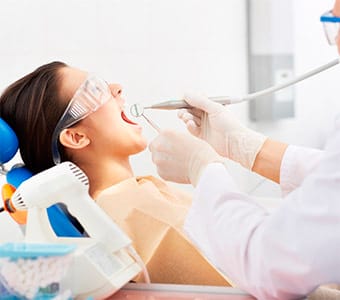
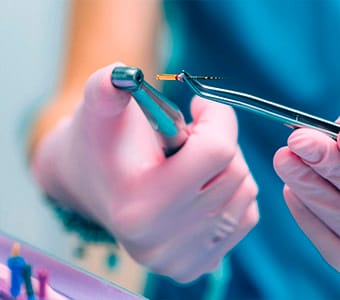
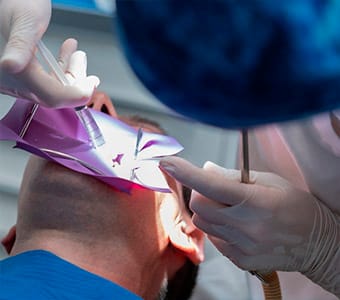
The SIROLaser can be effective used for a wide range of endodontic, periodontal, or surgical procedures. The SIROLaser uses short controlled bursts of laser energy that allows your dentist to perform your procedure with relatively less pain and several other benefits.
Some advantages of the SIROLaser include:
The WATERLASE® YSGG provides drill-free, needle-free, painless dentistry. Unlike a drill, the WATERLASE laser generates no heat or vibration -- and therefore causes little or no pain. This technique can be used for decay removal, cavity preparation, root canals, etching, and other hard and soft tissue procedures.
The WATERLASE helps us help you in ways unavailable with traditional instruments, such as:
We are proud to be among the first practices in the Long Island area to offer the latest, state-of-the-art WATERLASE dental technology for our patients. Dr. Kelley, Dr. Rayhan, and the dental clinical staff have undergone extensive training for BIOLASE instruments to provide you with the most advanced and effective treatments available.
Contact Us to learn more about Laser Dentistry.

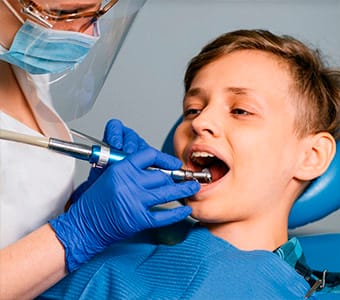
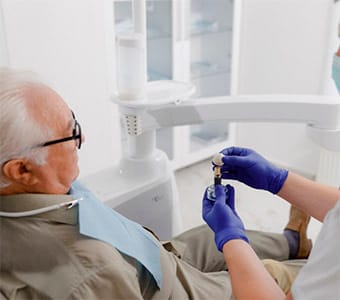
Dental appointments for children are important not only to evaluate tooth and gum health but also to educate the young patient in how to prevent dental problems and maintain a healthy smile throughout his or her life.
Your child should have a dental appointment before his or her first birthday, and check-ups should be scheduled about every six months after that to be sure no cavities or other problems develop. During a check-up we will evaluate:
Contact Us to learn more about Pediatric Dentistry.
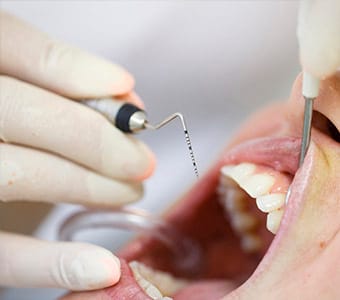
Preventative dentistry helps prevent dental problems and related health conditions before they start. The health of your mouth is essential to the health of your entire body, as gum disease has been linked to heart disease, stroke, diabetes, low birth weight and other serious health problems. Our preventative dentistry services focus on keeping your teeth and mouth happy and healthy, and detecting any abnormalities as early as possible to reduce the risk of damage and ensure the most effective treatment options. This is done through regular brushing and flossing at home and routine cleanings and exams performed by a professional. Effective preventative care requires a lifelong commitment to maintaining the health of your teeth in order to prevent the need for invasive treatments.
Contact Us to learn more about Preventative Dentistry.
Home whitening is a bleaching process that lightens discoloration and stains. This discoloration can be caused by aging, staining substances such as coffee, colas, or tobacco, tetracycline, excess fluoride intake while the teeth were forming, or tooth nerve degeneration.
Whitening agents work by using a specially formulated gel to gently force oxygen through the enamel of your teeth, virtually erasing stains and brightening your teeth without damaging their structure.
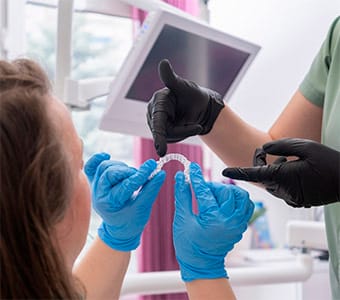
After an examination to make sure you don't have gum disease, cavities, or other oral problems, we take impressions of your teeth. From these impressions, we make precise models of your teeth. Using these models, we make a personalized tray that fits tightly over your teeth and allows us to achieve optimum results. At home, the tray is filled with a gentle whitening solution. You'll place the trays in your mouth, over your teeth, and keep it in place for 30 minutes during the morning followed by 30 minutes at night. it is not recommended to sleep with the trays. patients who sleep with trays have a higher occurance of sensitivity.
Our staff at Clock Tower Dental will also closely monitor the progress you are making with your at-home whitening kit to make sure the surrounding gum tissue isn't becoming irritated. When the process is complete, your smile will be noticeably whiter and brighter!
Contact Us to learn more about Teeth Whitening.
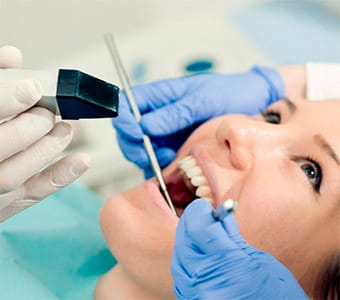
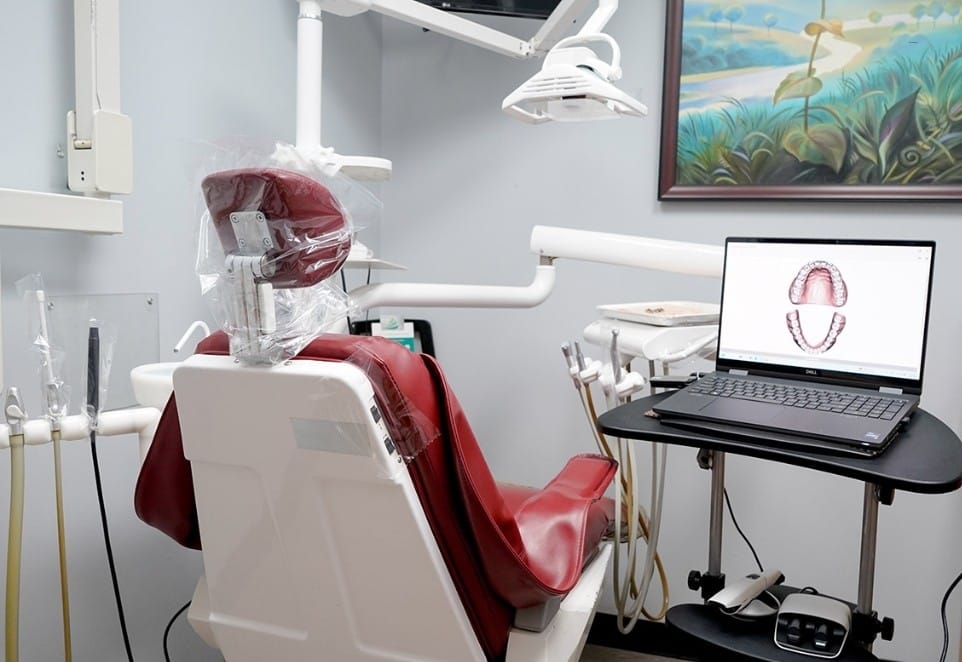
X-rays are one of the most common procedures used to diagnose a wide variety of conditions in nearly every area of the body. Although x-rays are usually effective in identifying abnormalities, their method for doing so is somewhat outdated. Despite an increasingly digital world, x-rays still use sheets of film that require processing much like film in a regular camera. New technologies now allow for digital X-rays, which reduce radiation exposure by up to 80 percent, and produce instant, high-quality images. This allows results to be discussed between dentist and patient immediately after examination, and also allows your dentist to easily share your X-rays with other doctors, if needed.
Digital x-rays are performed similarly to conventional x-rays, but use a special imaging detector that "reads" the body part rather than exposing it on film. This is the same technique used for regular digital cameras. Digital x-rays allow for faster results and delivery to other doctors, as the images can be viewed on a computer rather than having to send the actual film. This technique also exposes patients to less radiation, a minor risk involved in conventional x-rays. The speed and safety of digital x-rays make them the preferred type of imaging test and a top-quality service that we proud to offer.
Contact Us to learn more about Digital X-rays.
A panorex, or panoramic X-ray, provides a full view of the upper and lower jaws, teeth, temporomandibular (TM) joints, and sinuses. A panorex makes a complete half circle from ear to ear to produce a complete two dimensional representation of the entire oral cavity. This panoramic view is accomplished by rotating the X-ray film around the head for approximately 12 seconds.
The Panorex method differs from the traditional full-mouth set of dental X-rays by showing much more or the patient’s oral cavity. Less radiation is produced and the procedure is more comfortable for the patient.
A panorex can be used to reveal cysts, tumors, bone irregularities, wisdom teeth and more. As an example, the mandibular nerve (the nerve going to the lower lip) cannot be seen in a full-mouth set of X-rays, but can be visualized in a panorex X-ray.
Contact Us to learn more about Panorex X-rays.